


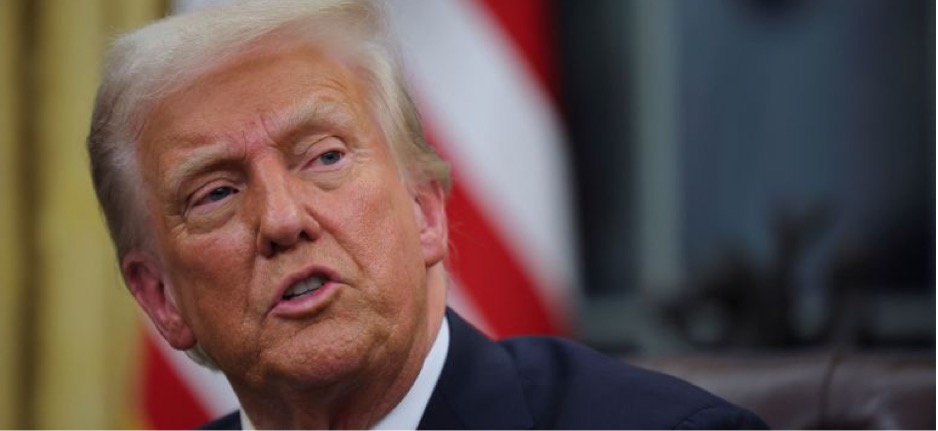
The United States President Donald Trump has issued a stark warning to Canada, claiming the country is vulnerable to increasing threats from Russian and Chinese warships due to its lack of military protection.
Speaking to the White House reporters today, Trump stressed that Canada does not allocate enough resources to its defense, leaving it exposed to modern security threats.
“Take a look at what’s going on out there (Canada),” Trump said. “You have Russian ships, you have Chinese ships, you have a lot of ships out there, and you know, people are in danger.”
He went on to emphasize that the global security landscape has changed significantly, suggesting that Canada’s current military capabilities are inadequate to counter potential threats.
“This is a different world. Today, it’s a different world,” he stated. “They don’t have any military protection because they essentially don’t spend enough.”
Despite his concerns about global security, Trump also noted his past diplomatic relationships with key world leaders.
“I have had a good relationship with President Putin, I have had a good relationship with President Xi,” he added, referencing Russian President Vladimir Putin and Chinese President Xi Jinping.
Trump’s remarks about Canada’s military vulnerabilities come just weeks after he suggested that Canadians would have access to better healthcare if their country became part of the United States.
During a briefing in North Carolina, Trump criticized the trade relationship between the U.S. and Canada before making a surprising statement about the possibility of Canada becoming the 51st U.S. state.
“I would love to see Canada be the 51st state,” Trump said.
According to him, if Canada joined the U.S., its citizens would benefit from significant tax reductions and improved healthcare services.
“The Canadian citizens, if that happened, would get a very big tax cut, a tremendous tax cut , because they are very highly taxed,” he added.
Trump’s latest warning about Canada’s military vulnerabilities has sparked discussions about the country’s defense spending and geopolitical position. While Canada is a NATO member, its military budget has long been a point of debate, particularly in discussions about burden-sharing within the alliance.
Critics argue that Trump’s remarks reflect his broader stance on NATO allies needing to contribute more to their own defense. However, others view his comments as an oversimplification of Canada’s security strategy, which includes strong alliances and strategic partnerships.
Similarly, his previous suggestion that Canada should become part of the U.S. was met with skepticism and criticism from both sides of the border. While some Americans supported the idea of closer ties with Canada, many Canadians rejected the notion, emphasizing their country’s independence and distinct national identity.
As tensions rise globally and geopolitical dynamics shift, Trump’s comments add another layer to the ongoing debate about Canada’s role in international security and its relationship with the United States.